
What is tinea cruris?
Tinea cruris, also known as jock itch or jockey itch, is a common fungal infection that belongs to the group of dermatophytosis, also known as tinea or impinge.
This condition primarily affects the area around the inguinal folds (groin), causing significant discomfort and impacting quality of life. As a naturally warm and moist area, the groin provides ideal conditions for the growth of the fungi responsible for the infection.
The most common symptoms include intense itching, redness, and peeling of the skin in the affected area. In many cases, jock itch has well-defined edges and a ring shape that can expand over time, reaching nearby areas such as the inner thighs or buttocks. This combination of symptoms often causes not only physical discomfort but also embarrassment, especially when the lesion is extensive.
Although jock itch is more common in men, it can also occur in women, especially in situations that favor the proliferation of fungi, such as intense physical activity, wearing tight clothing, or frequent exposure to heat and humidity. In addition, factors such as obesity, diabetes, or a weakened immune system can increase the predisposition to developing this infection.
In this article, we will present images of cases of jock itch to illustrate how this infection manifests visually. Our goal is to aid in the early identification of the condition and provide an additional resource for those seeking to better understand the signs of this infection. It is important to remember that when noticing similar symptoms, medical evaluation is essential to confirm the diagnosis and begin appropriate treatment.
Images of tinea cruris (jock itch) lesions
The main symptoms of jock itch are intense itching and redness in the area around one or both groins.
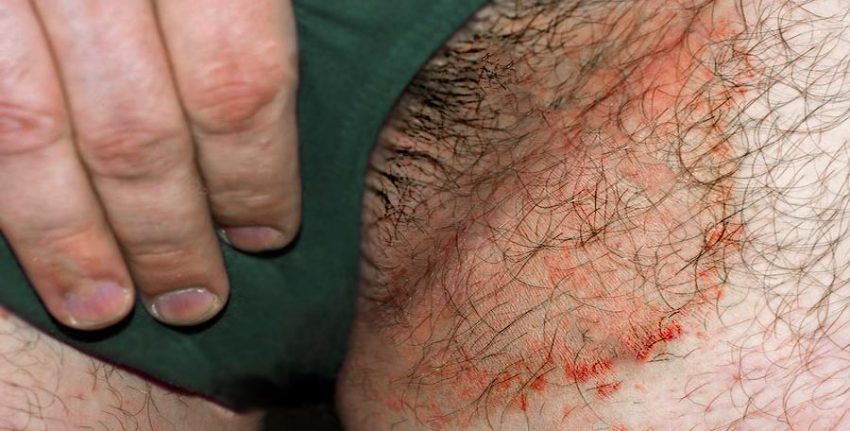
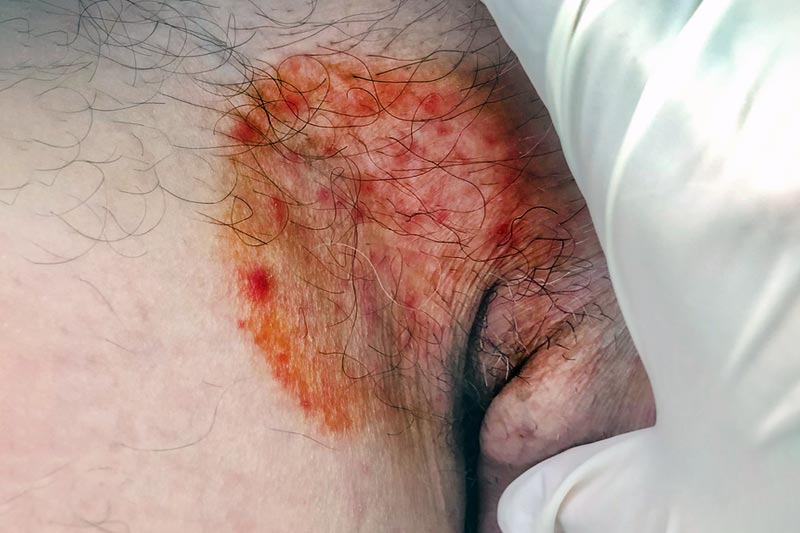
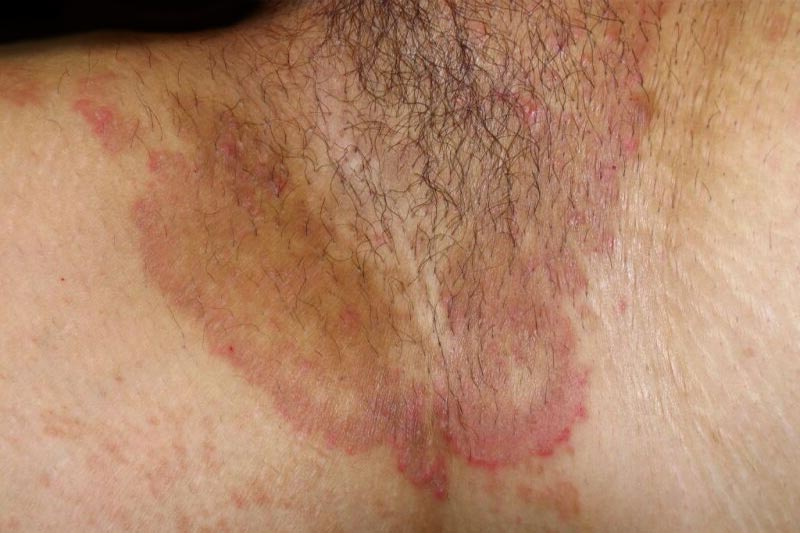
Tinea cruris usually begins with a reddish plaque on the inside of one or both thighs, with well-demarcated borders. The lesion can spread over the inner thighs to the pubic area and buttocks. The lesions usually expand in the shape of circles.
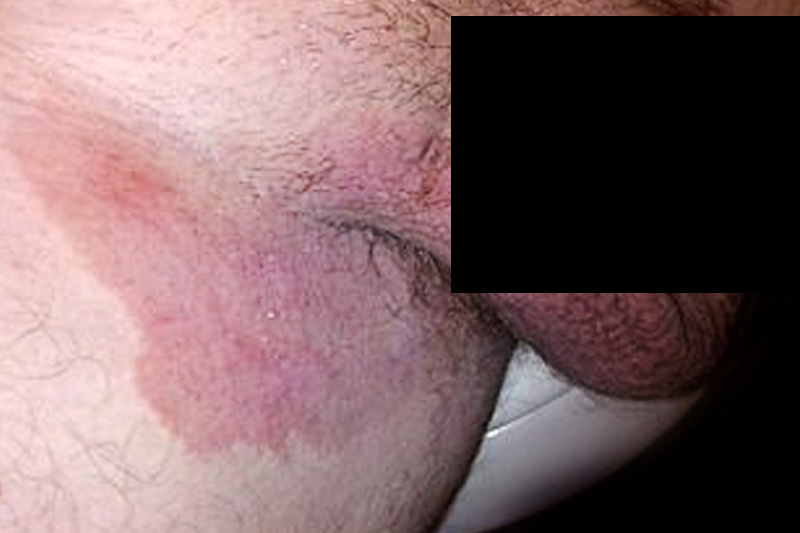
In men, the scrotum and penis are usually spared or have milder redness. This feature helps distinguish between tinea cruris and yeast infections, since candidiasis in the inguinal region in men often affects the scrotum and penis.
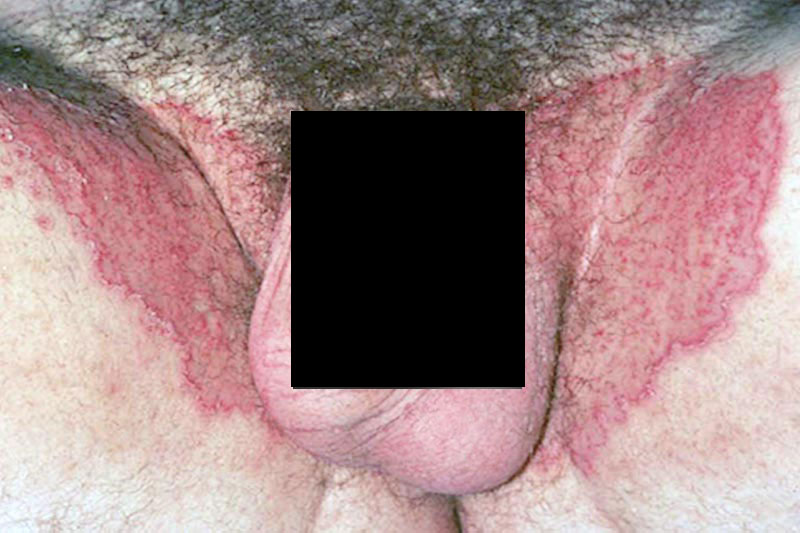
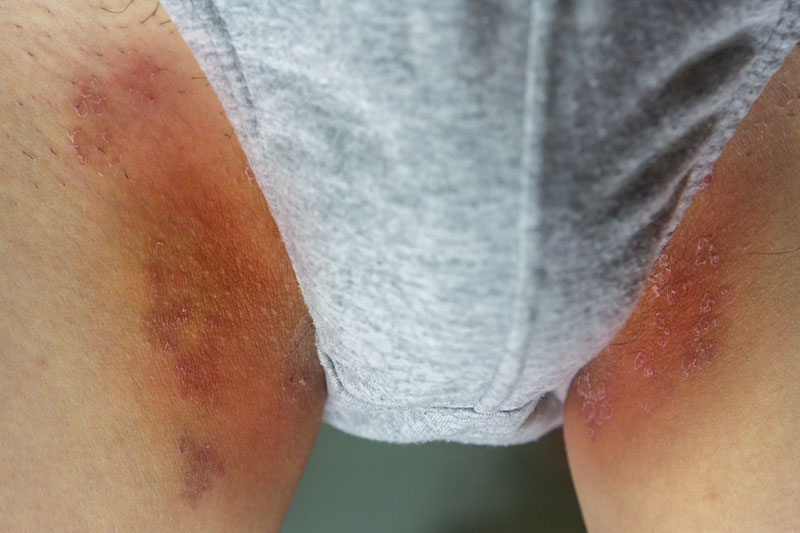
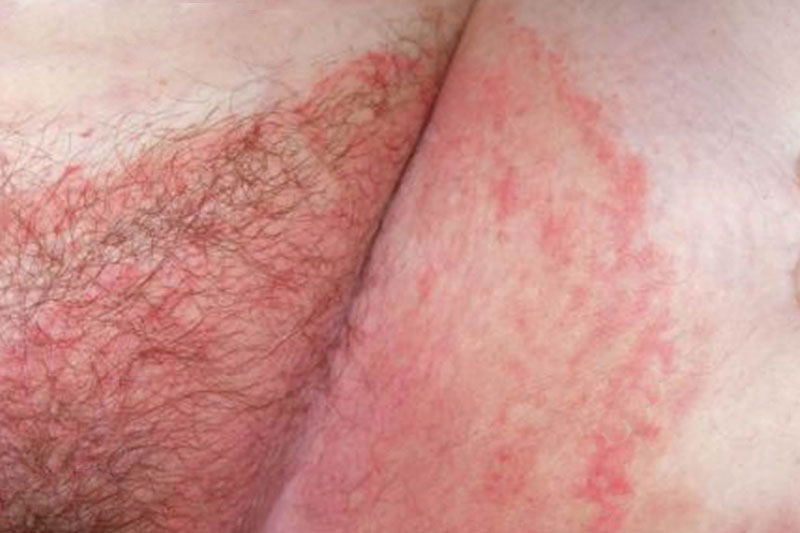
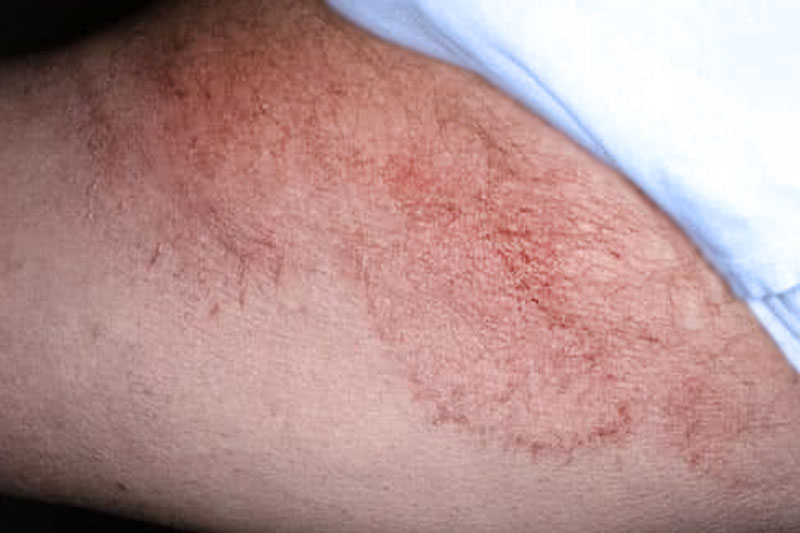
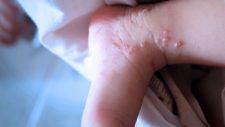
As you can see in the photos, rounded lesions that expand from the center to the periphery are very common. The edges are typically redder and more prominent, while the center is lighter.
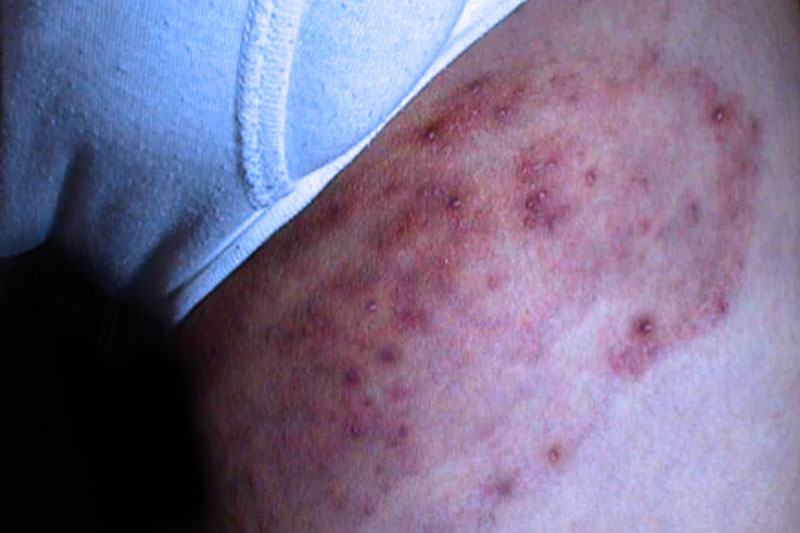
Some patients may present with dermatophytic folliculitis, which appears as papules or pustules along the margin, as shown in the image above.
What causes jock itch?
The fungi that cause dermatophytosis are called dermatophytes. There are more than 50 species of dermatophyte fungi, distributed among 9 genera. In humans, the main genera that cause infection are Trichophyton, Microsporum and Epidermophyton.
Tinea can appear on any area of the skin, hair, or nails. The main types of dermatophytosis are:
- Tinea pedis: dermatophyte infection of the foot, also called athlete’s foot.
- Tinea cruris: tinea infection of the groin.
- Tinea capitis: tinea infection of the hair on the scalp.
- Tinea unguium: fungal infection of the nail, also called onychomycosis.
- Tinea barbae: infection of the beard hairs.
- Tinea corporis: infection by dermatophytes on skin surfaces apart from the feet, groin, face, scalp or beard.
For more information on tinea cruris, go to: Photos of Jock Itch (Tinea Cruris or Groin Ringworm).
References
- Diagnosis and Management of Tinea Infections – American Family Physician.
- Tinea cruris – DermNet New Zealand.
- Tinea Cruris – Medscape.
- Shutterstock.






Reader questions about this topic
Real questions submitted by readers and selected by the editor for their relevance to this article.
More reader comments
Greetings Sir..
I’m from Africa and Nigeria to be precise, I’m having itches in my penis region, what medication can I take to cure it off please.
Thank you..
Will be expecting your response