
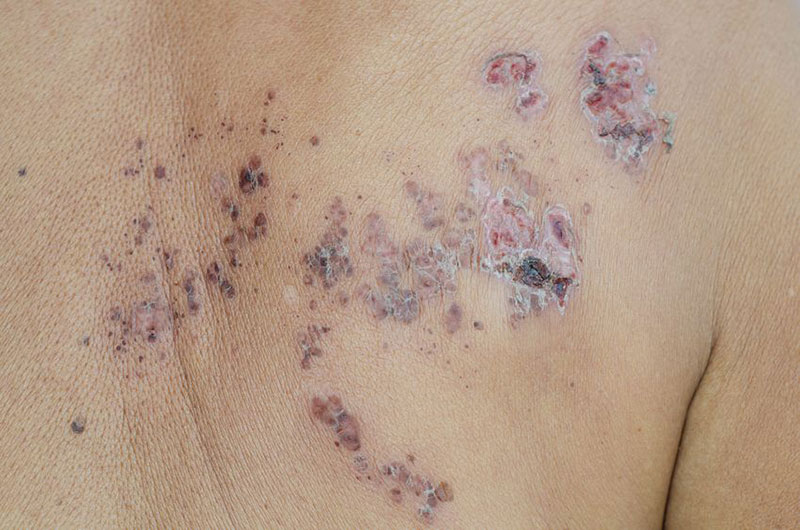
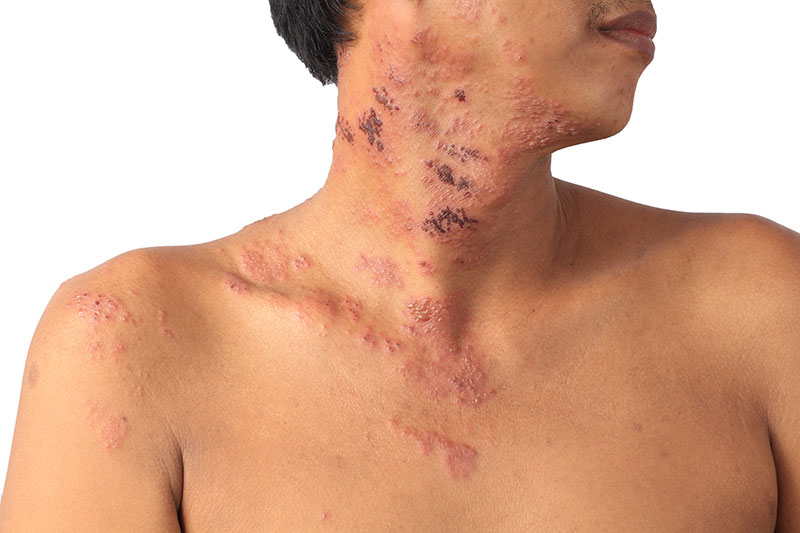
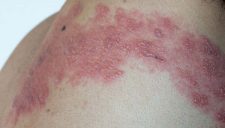
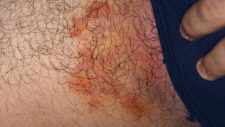
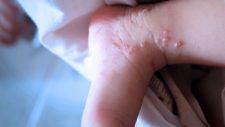
This is a page of photos showing typical herpes zoster lesions. For detailed information on causes, symptoms, vaccines, and treatment options, see the article: Shingles (Herpes Zoster): Causes, Symptoms, and Treatment.
What is shingles?
Shingles, also known as herpes zoster, is a skin disease caused by the Varicella-Zoster virus, the same virus that causes chickenpox.
Although they are caused by the same virus, chickenpox and shingles are different diseases. In fact, shingles is a reactivation of the chickenpox virus, which usually occurs decades after the patient was first infected, usually in childhood.
Anyone who has been infected with the Varicella-Zoster virus at some point will have it “dormant” in their body for the rest of their life, controlled by the immune system. The virus can lie dormant for decades, waiting for an event that weakens the immune system to “wake up” and multiply again.
When this occurs, the reactivation of Varicella-Zoster does not cause a new case of chickenpox, but rather shingles, which is clinically very different.
Images of herpes zoster
The typical lesions of herpes zoster are multiple reddish vesicles that usually cluster together and are restricted to a small area of the body, such as the face, trunk, or one of the limbs.
When this occurs, the reactivation of Varicella-Zoster does not cause a new case of chickenpox, but rather herpes zoster, which is clinically quite different.
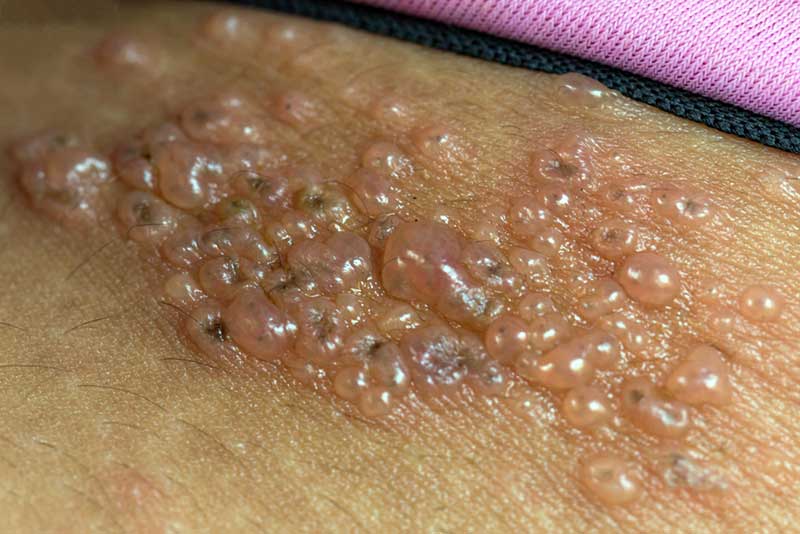
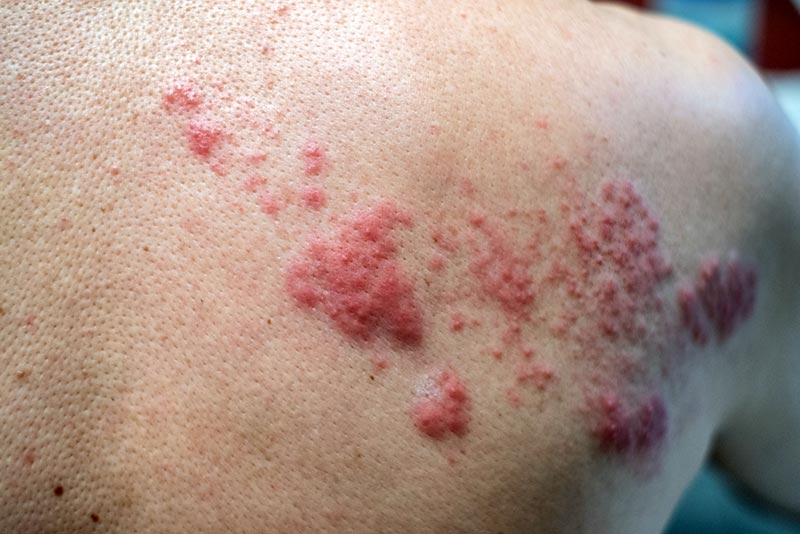
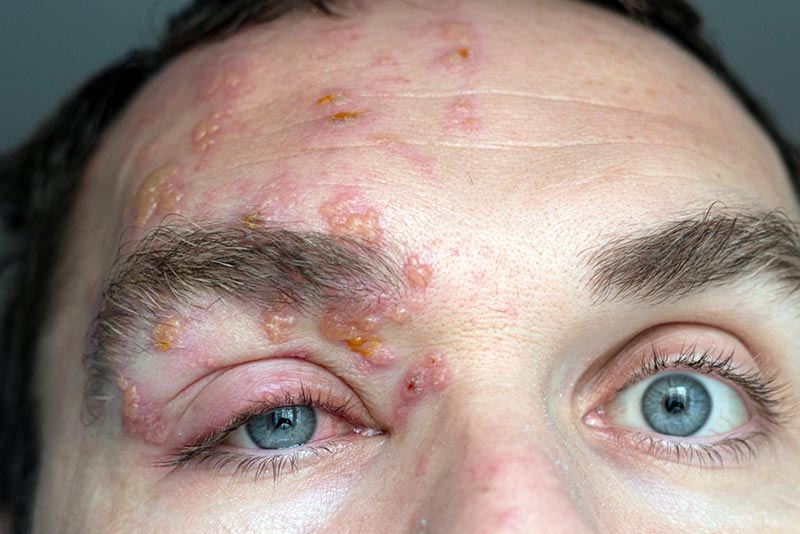
The way herpes zoster lesions cluster, usually in a “band” and never crossing the midline of the body, is the most important feature for diagnosing the infection.
If the lesion develops on the left side of the trunk, it does not extend to the right side. In the article on Herpes zoster, we explain why this occurs.
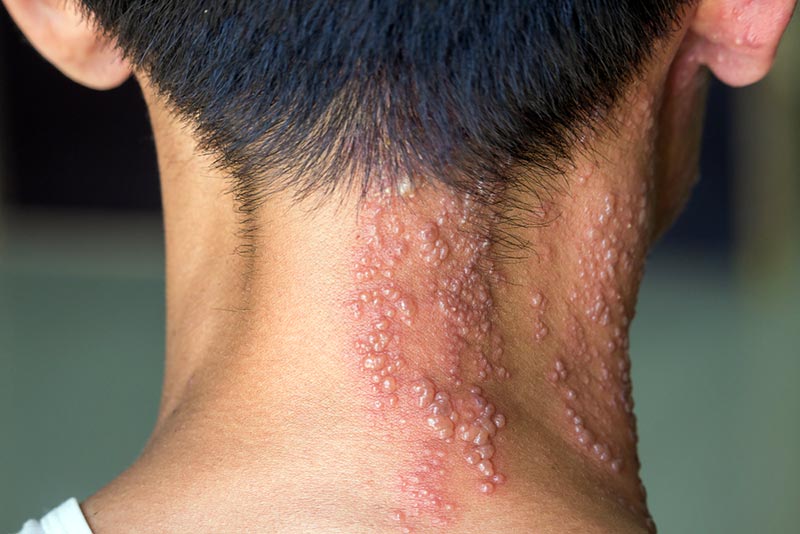
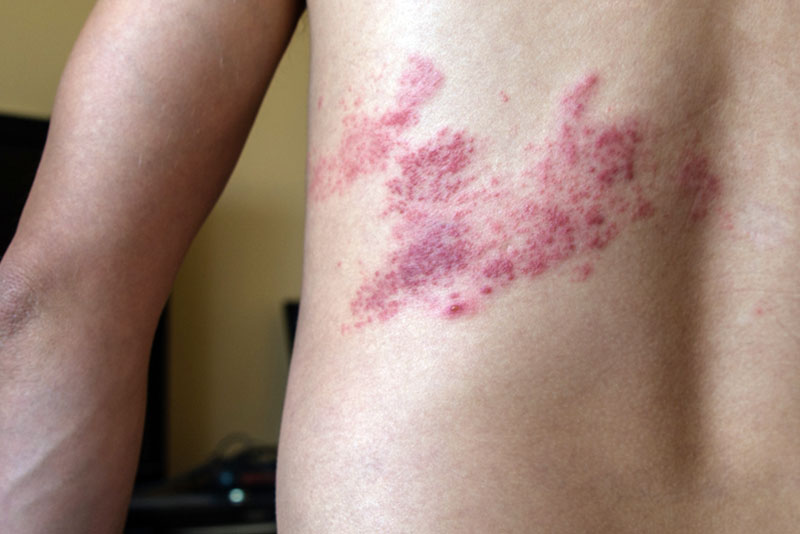
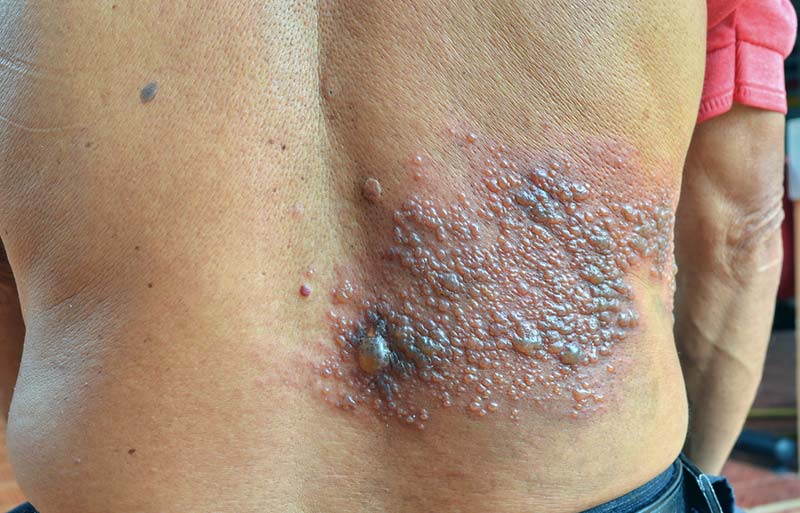
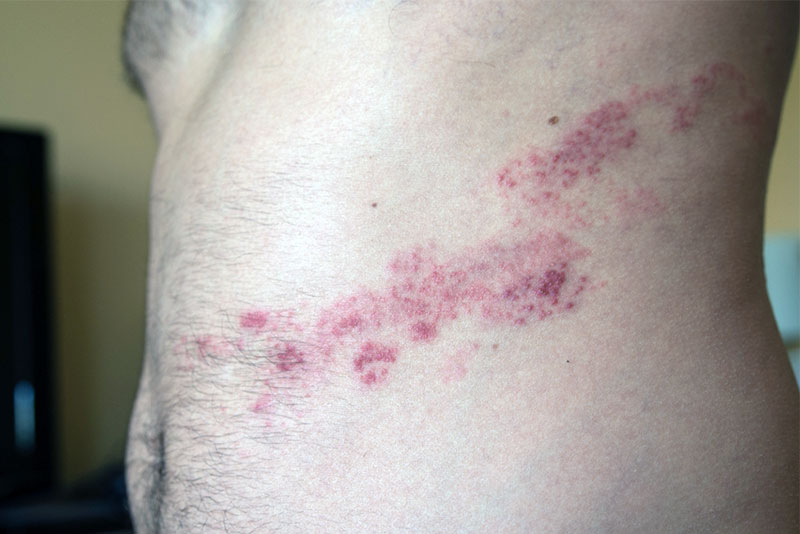
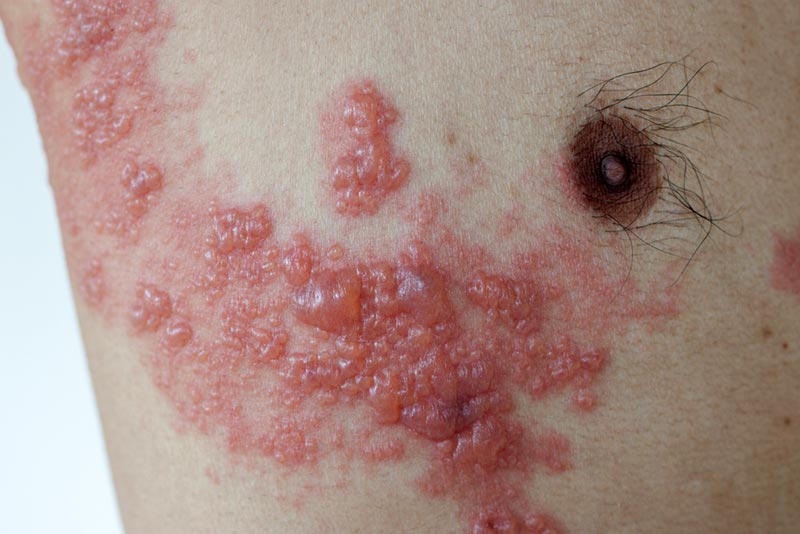
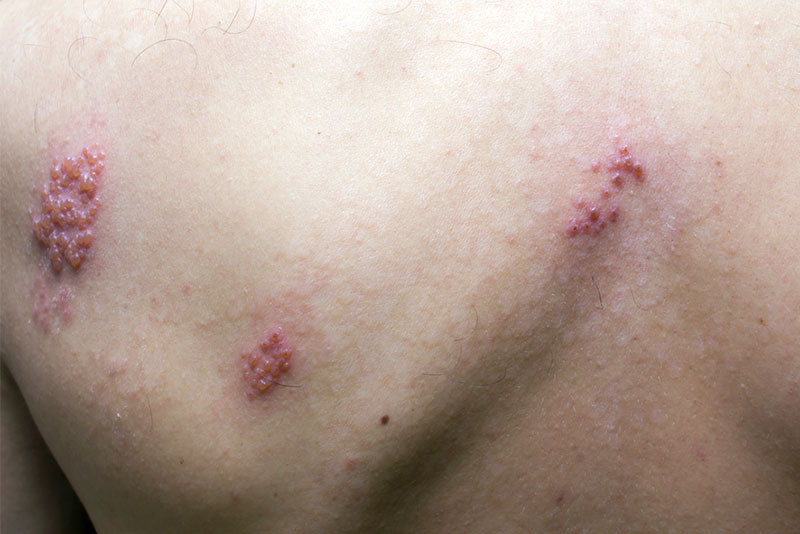
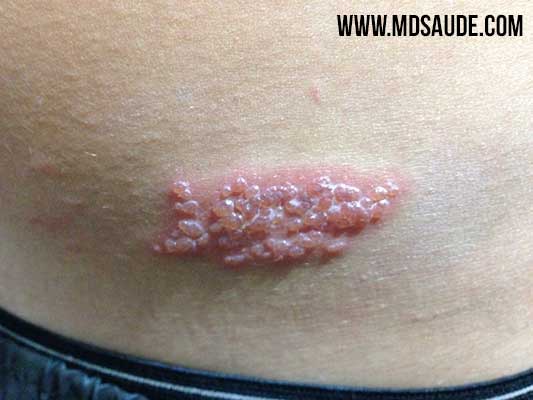
New blisters appear over the course of 3 to 5 days, usually subsiding after 7 to 10 days, when the blisters dry out and begin to form scabs. The lesions and pain can take up to a month to disappear completely. In some cases, the lesion caused by shingles can leave scars.
References
- Shingles (Herpes Zoster) – Centers for Disease Control and Prevention (CDC).
- Shingles (herpes zoster) – Public Health England.
- Epidemiology, clinical manifestations, and diagnosis of herpes zoster – UpToDate.
- Shutterstock.






Reader questions about this topic
Real questions submitted by readers and selected by the editor for their relevance to this article.